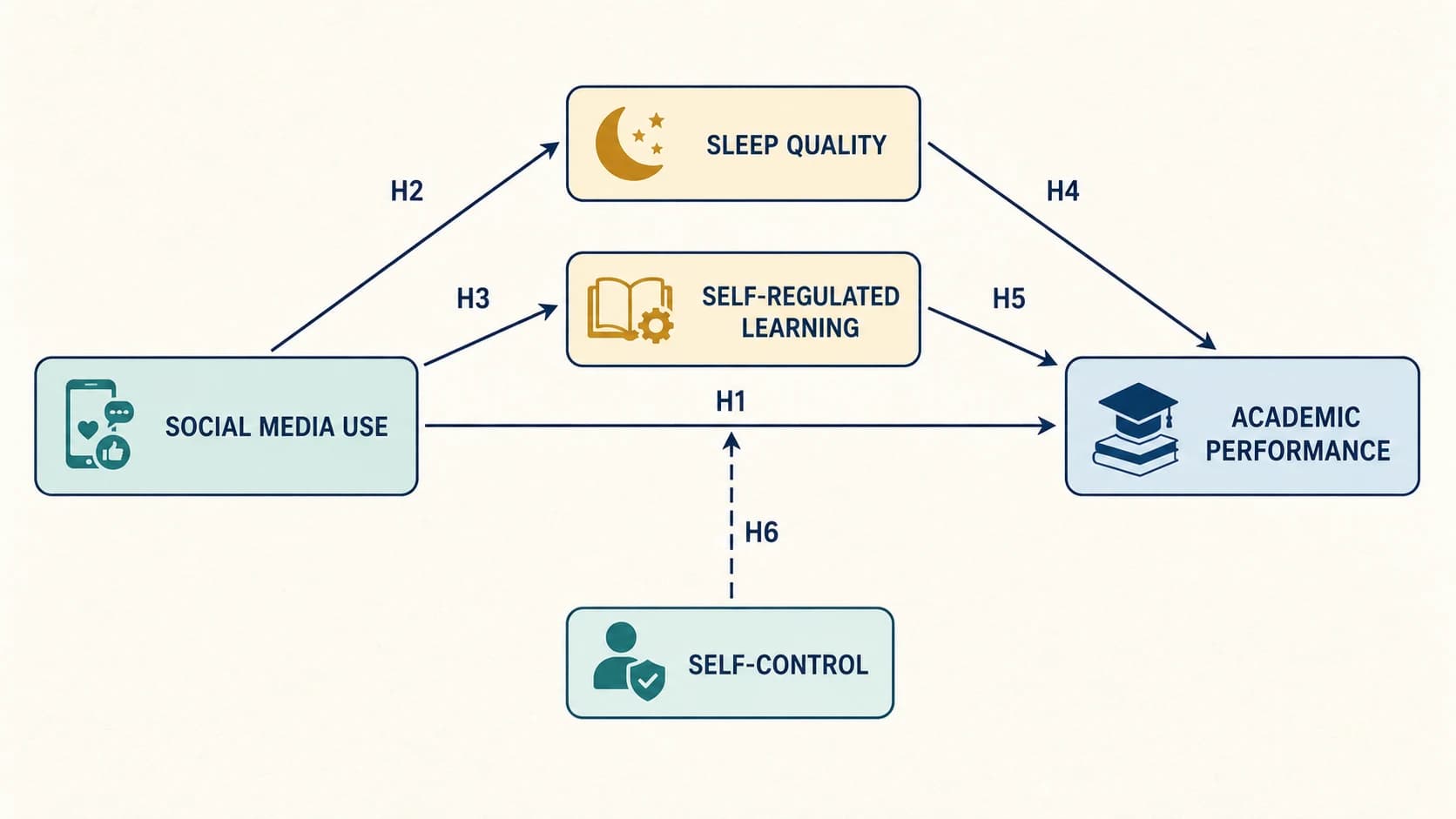
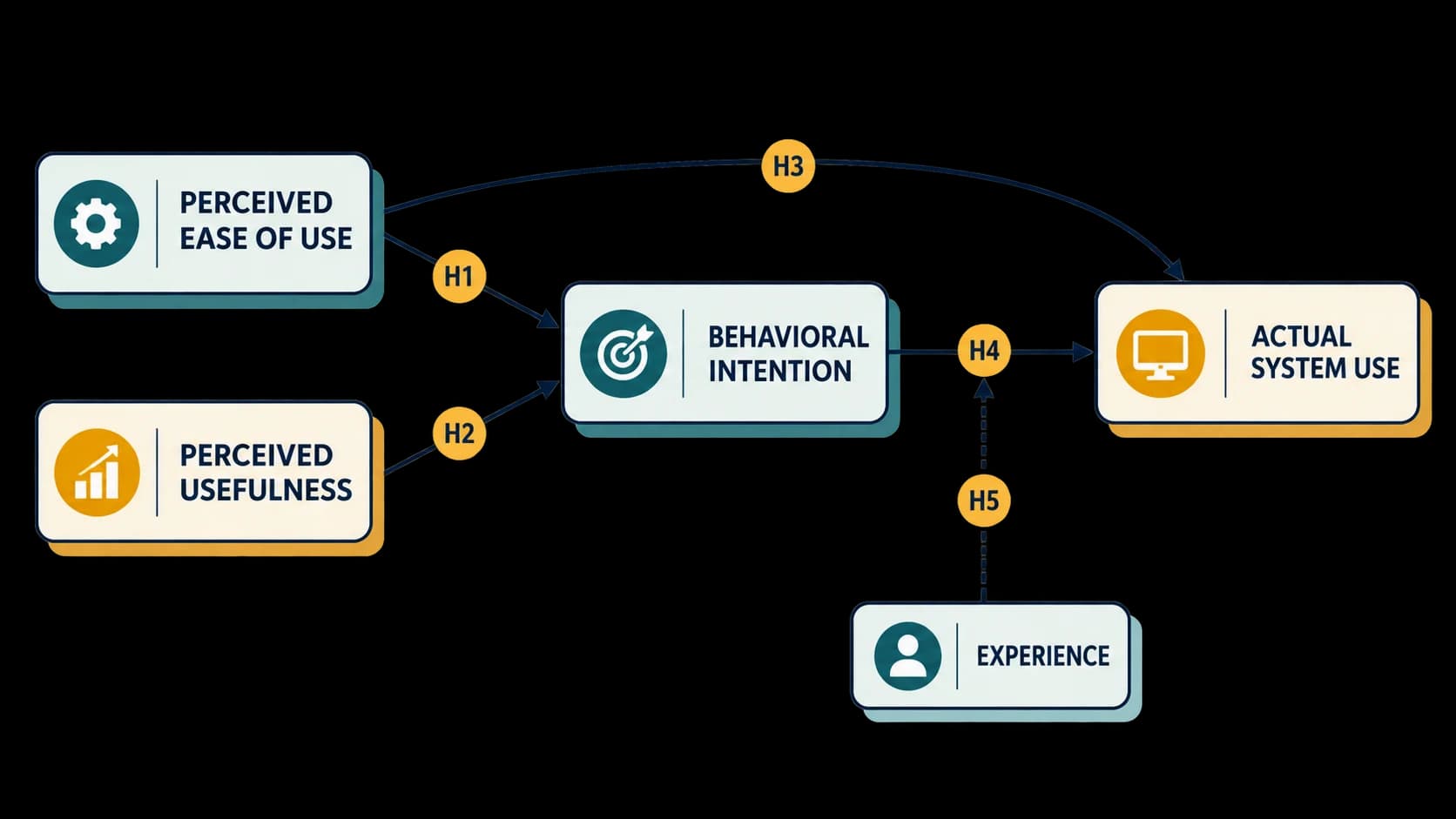
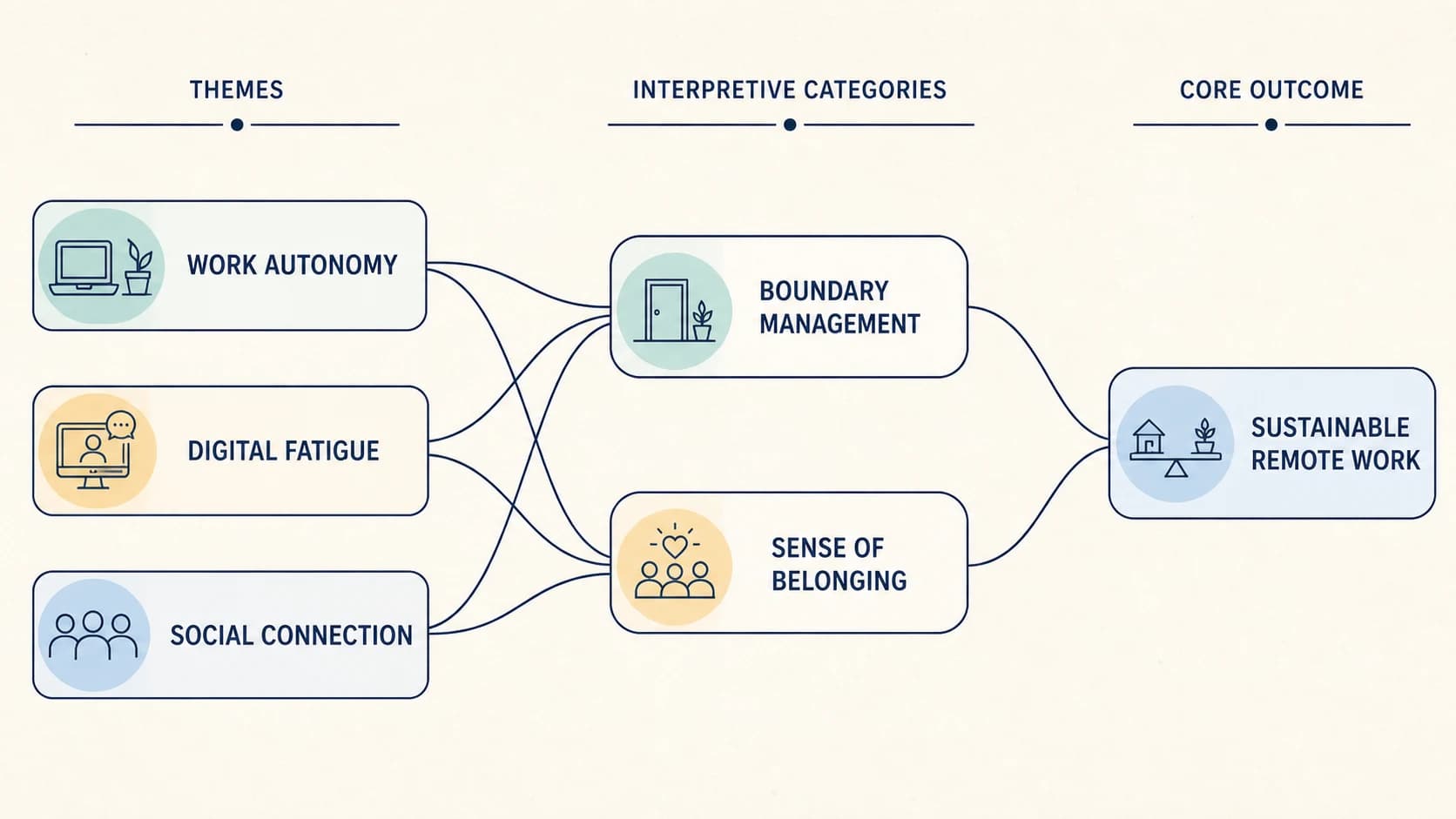
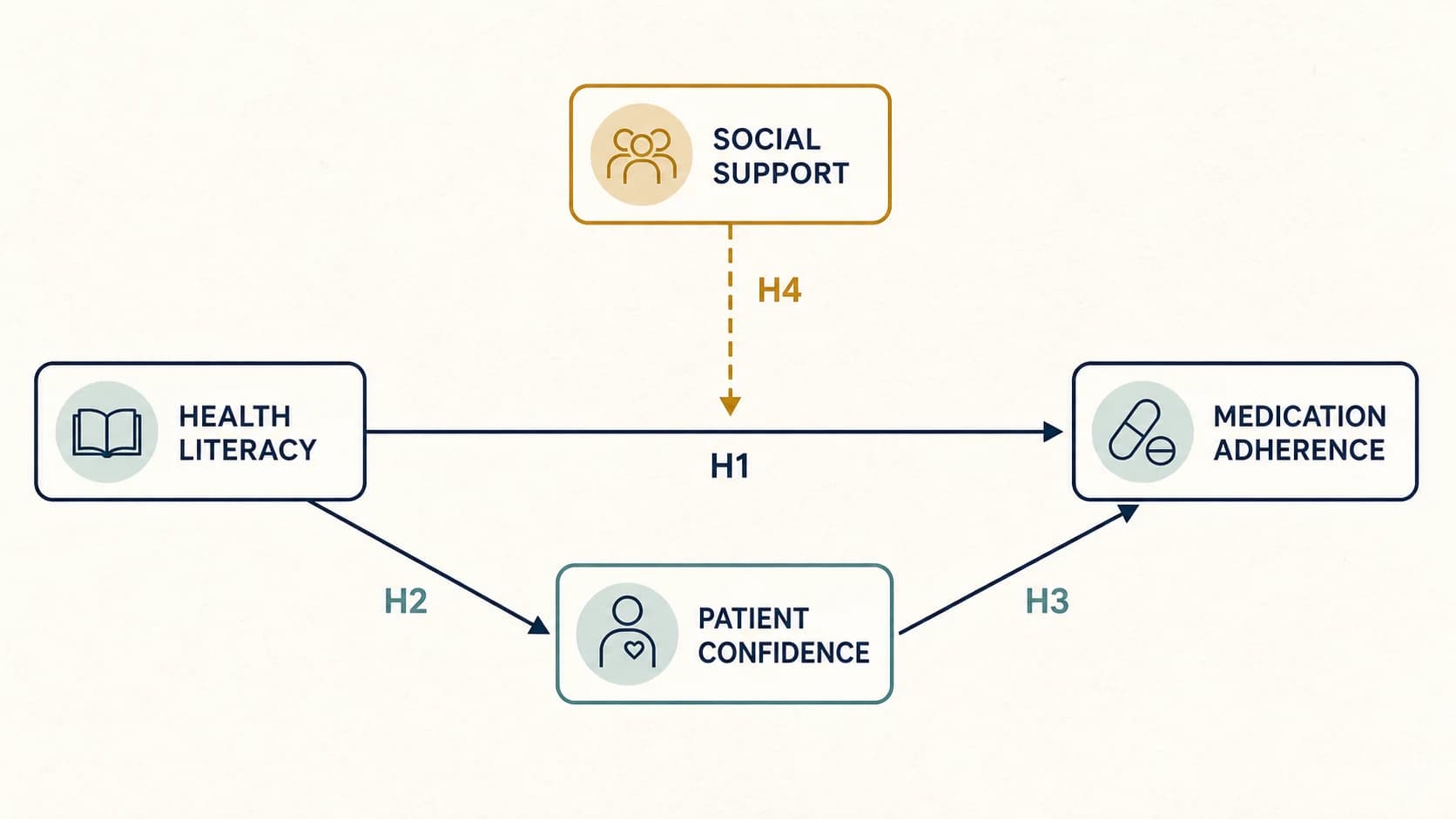
A conceptual framework is a study-specific map of the concepts, variables, or themes you expect to be related. In quantitative research it commonly places independent variables on the left, dependent variables on the right, and uses arrows to show hypotheses, mediation, or moderation.
The framework sits between the literature review and the methodology. It converts broad theory into the exact relationships your study will examine, helping a supervisor or reviewer check whether the research question, hypotheses, variables, and analysis plan agree.
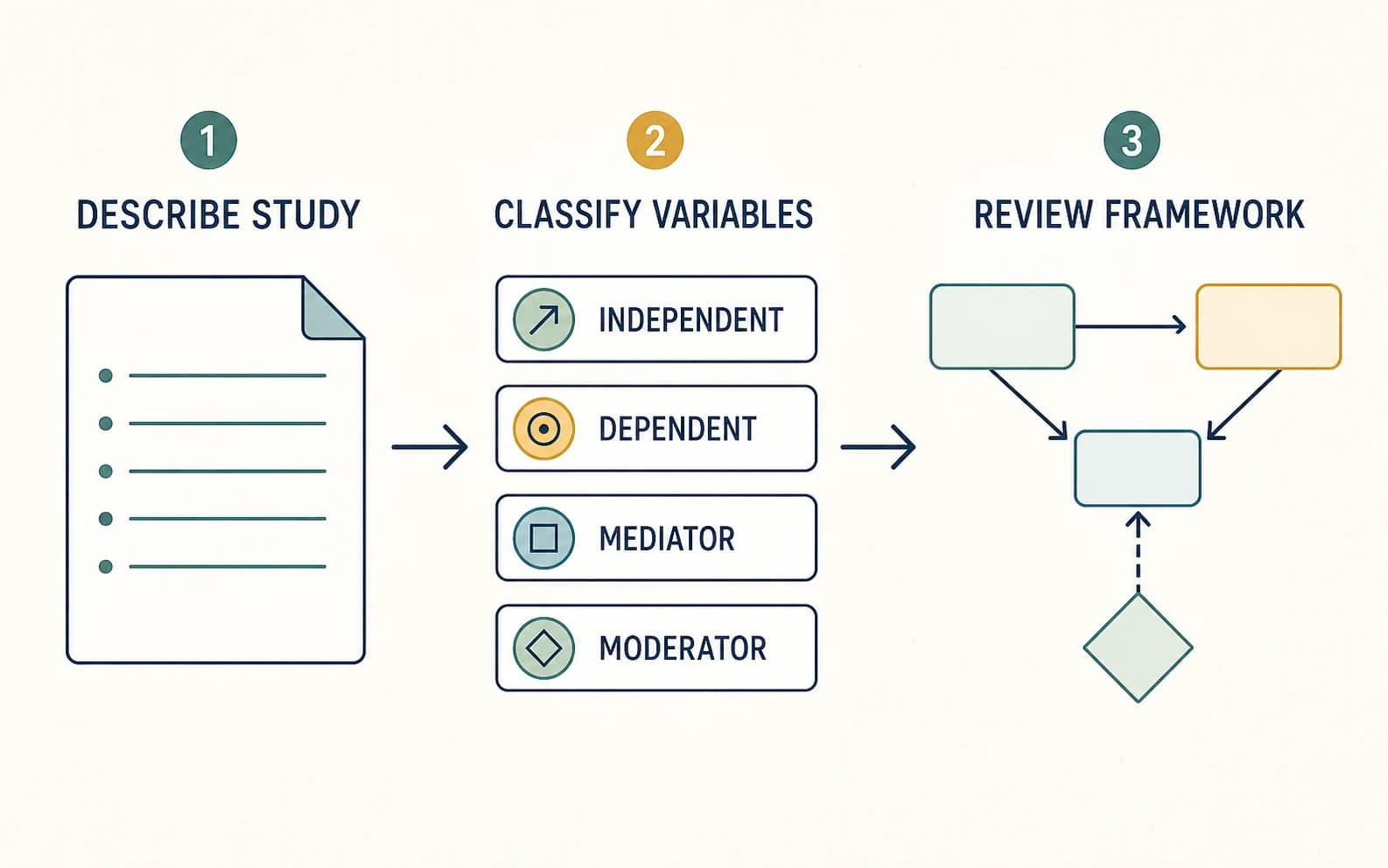
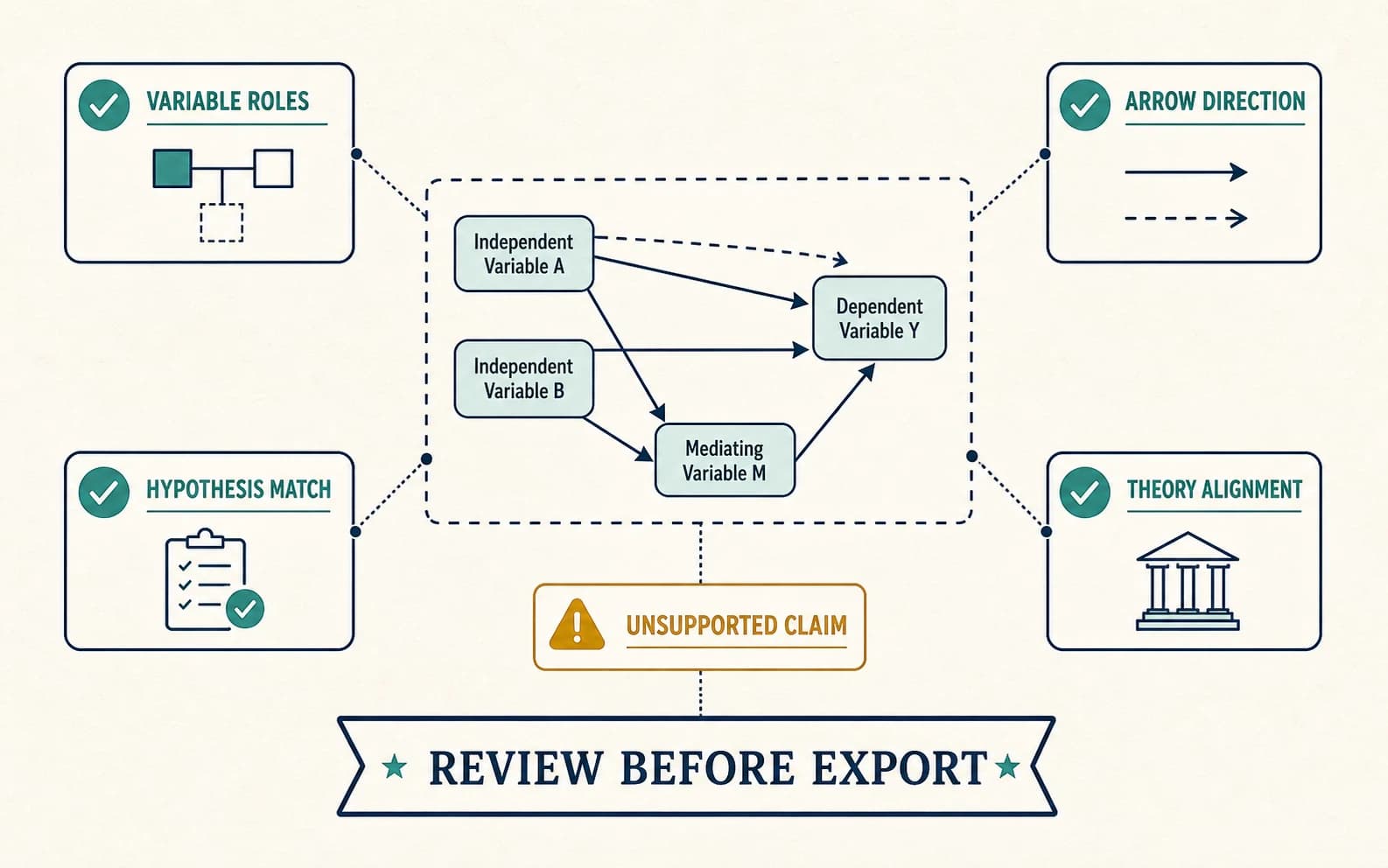
An AI conceptual framework generator can create a first diagram from a plain-language study description. The researcher still needs to verify the variable roles, arrow directions, hypothesis labels, theoretical basis, and institutional formatting requirements before using the figure.
Research question
The specific phenomenon and relationship the study examines.
Variable roles
Which constructs act as predictors, outcomes, mediators, moderators, or controls.
Expected relationships
The direction and type of each connection supported by the literature.
Theoretical basis
The theory or prior model that helps justify the proposed structure.