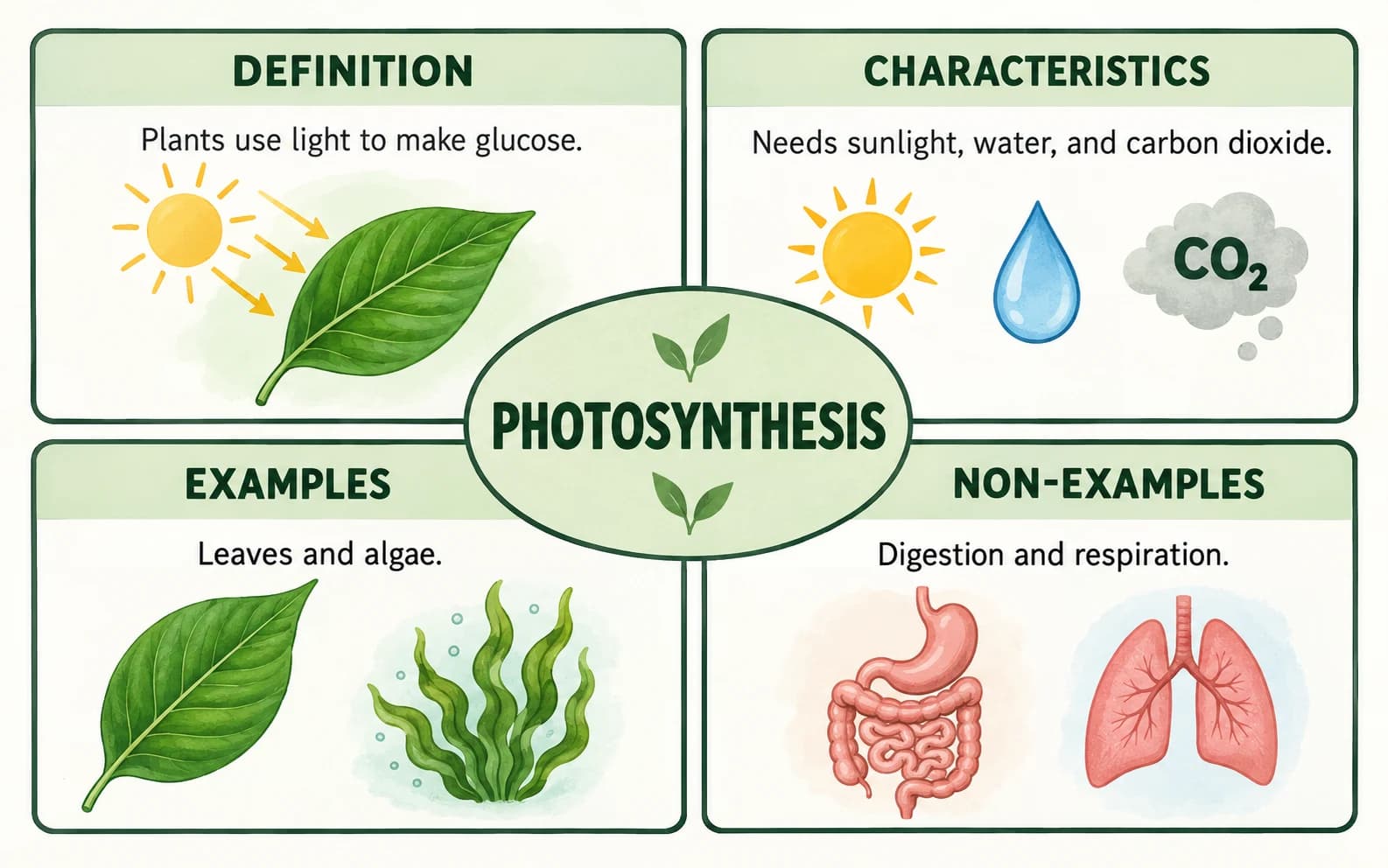
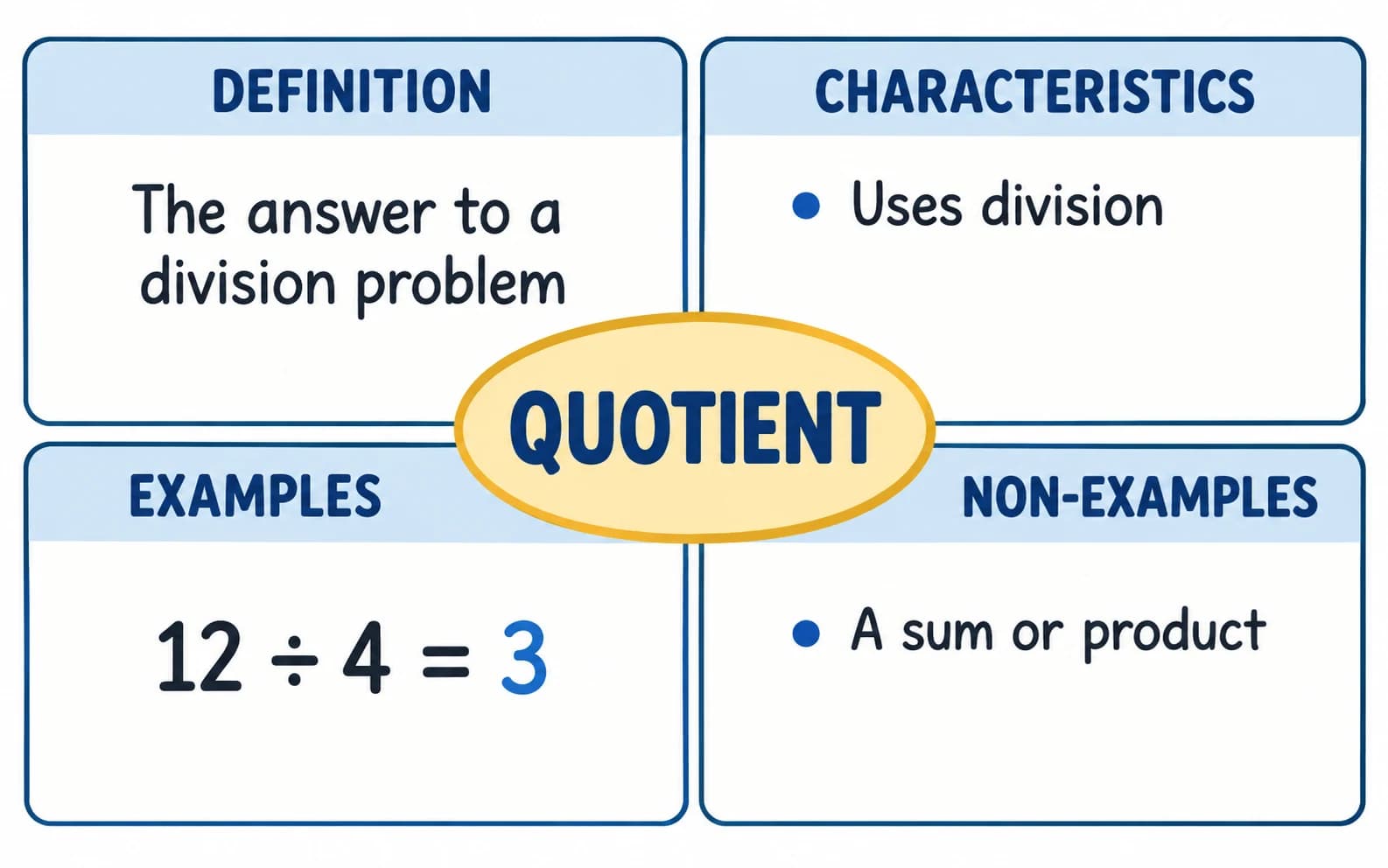
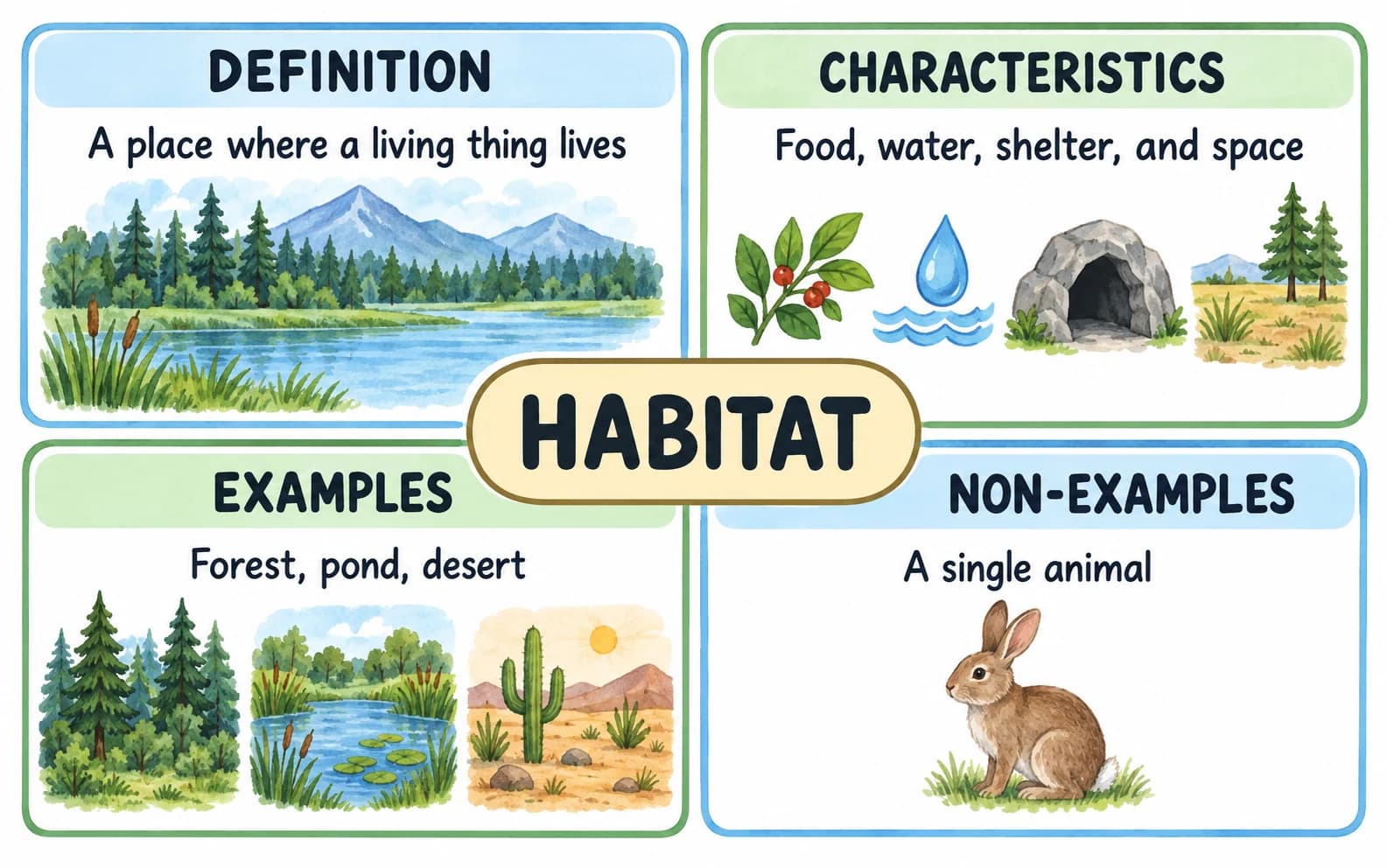
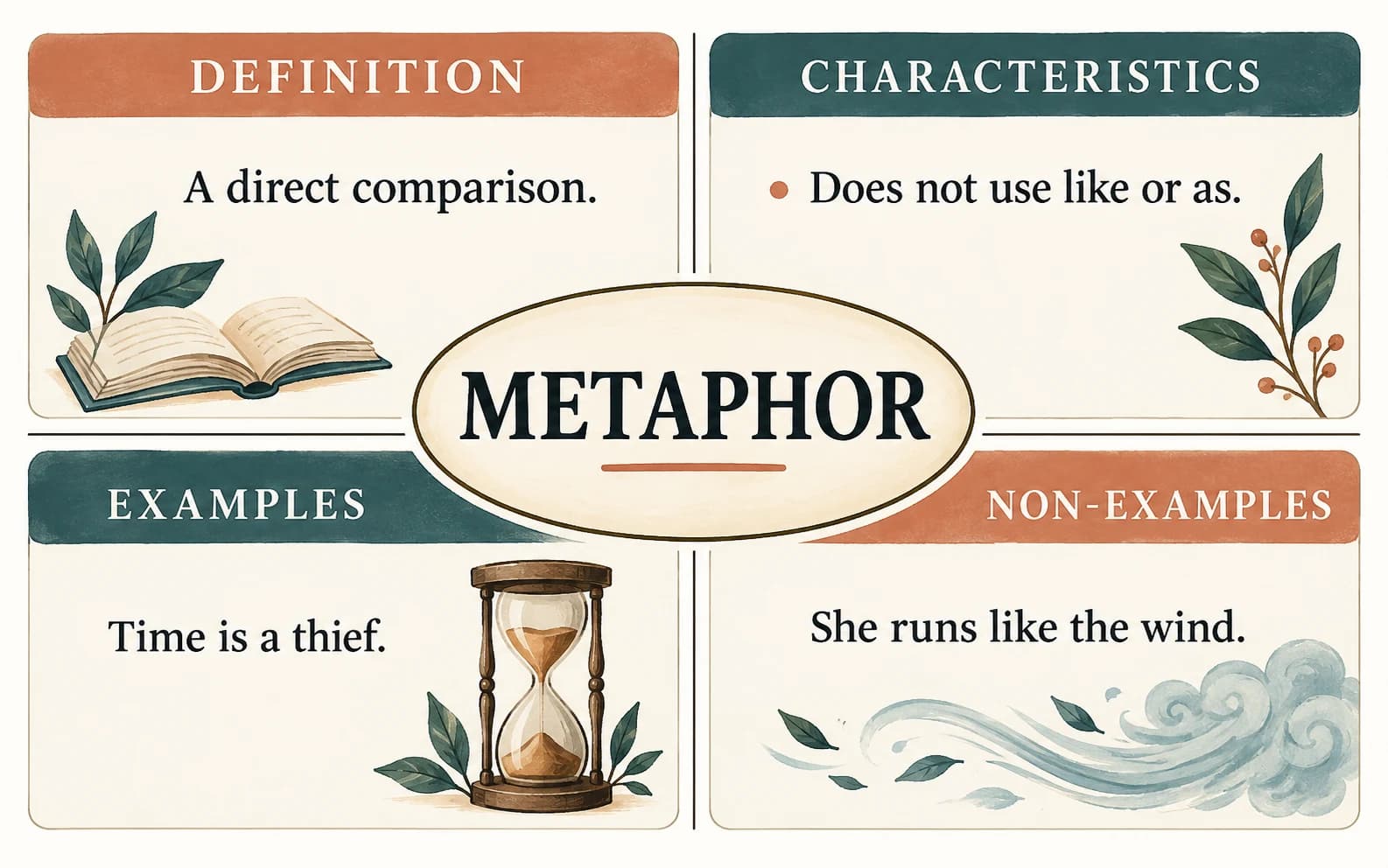
A Frayer model is a four-square graphic organizer for learning vocabulary and complex concepts. The target word sits in the center while learners describe its definition, defining characteristics, examples, and non-examples.
The non-example box is what makes the method especially useful. It asks students to test the boundary of a concept instead of copying a definition. A learner who can explain why a mushroom is not an example of photosynthesis usually understands more than a learner who can only repeat the term.
Teachers use Frayer models before reading, during direct instruction, in small groups, and as a vocabulary-wall artifact. They work across science, math, language arts, and social studies, and can include short phrases, sketches, or familiar real-world cases.
Definition
Explain the term accurately in learner-friendly language.
Characteristics
List the attributes that must or usually belong to the concept.
Examples
Name concrete cases that clearly fit the definition.
Non-examples
Contrast near misses and explain the concept boundary.