• Logo
    PaperBananaAI Academic Illustration Generator
Home
  • Home
  • Studio
  • Scientific Illustration Generator
  • Poster Maker
  • Diagram Maker
  • Figure Editor
  • Pricing
My Creations
  • My Creations
  • Invite Friends
LogoPaperBanana
HomePricingInvite Friends
LogoPaperBanana

PaperBanana - AI-powered academic illustration generator

support@paperbanana.me
All Tools

Tool directory

AI creation

  • Scientific Illustration
  • Graphical Abstract Maker
  • Scientific Poster Maker
  • Diagram Maker
  • Figure Editor

Diagrams & organizers

  • Conceptual Framework Generator
  • Graphic Organizer Maker
  • Frayer Model Maker
  • KWL Chart Maker
  • Cause and Effect Graphic Organizer
  • Compare and Contrast Graphic Organizer
  • Spider Diagram Maker
  • Plot Diagram Maker
  • Factor Tree Generator
  • Number Line Generator
  • Free Body Diagram Maker
  • PRISMA Flow Diagram Generator
  • Venn Diagram Maker
  • CONSORT Flow Diagram Generator

Data visualization

  • Scatter Plot Maker
  • Dot Plot Maker
  • Forest Plot Maker
  • Funnel Plot Maker
  • Kaplan-Meier Curve Maker
  • Box Plot Maker
  • Heatmap Generator
  • Volcano Plot Generator
  • Phylogenetic Tree Generator

Publishing tools

  • Free Journal Figure Checker
  • Free Image Format Converter
  • Free Tools
  • Prompts

© 2026 PaperBanana. All Rights Reserved.

Support

  • About
  • Pricing
  • Contact

Legal

  • Privacy Policy
  • Terms of Service
  • Acceptable Use
PricingContact
Physics tool · no sign-up

Free Body Diagram Maker — Free Online Tool

Use this online free body diagram maker to draw exact force vectors, calculate components and acceleration, check the physics, and export a clean FBD.

Exact force angles and componentsLive net-force calculationMass-to-weight and acceleration solverBuilt-in diagram checksSVG and PNG export

Interactive force workspace

Define the object and forces

Angles are measured counterclockwise from +x. Every edit updates the diagram and force table immediately.

Isolated object
External forces
Diagram display

Updates live

Free body diagram preview

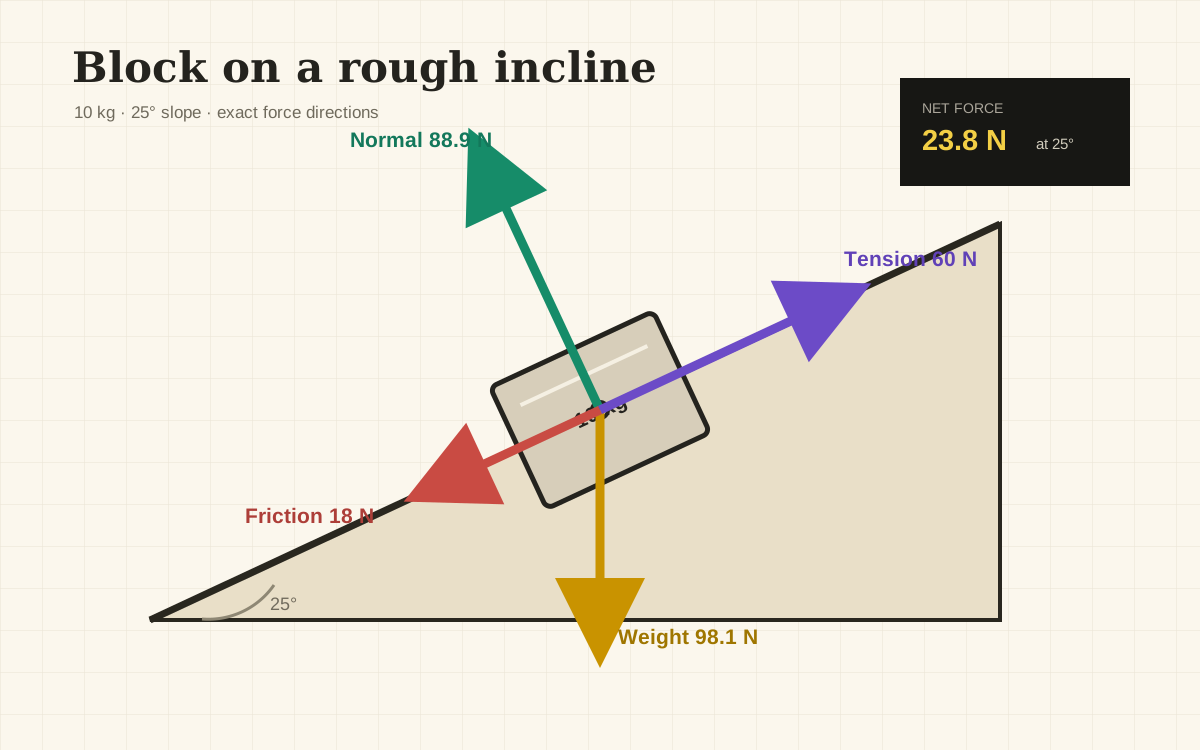
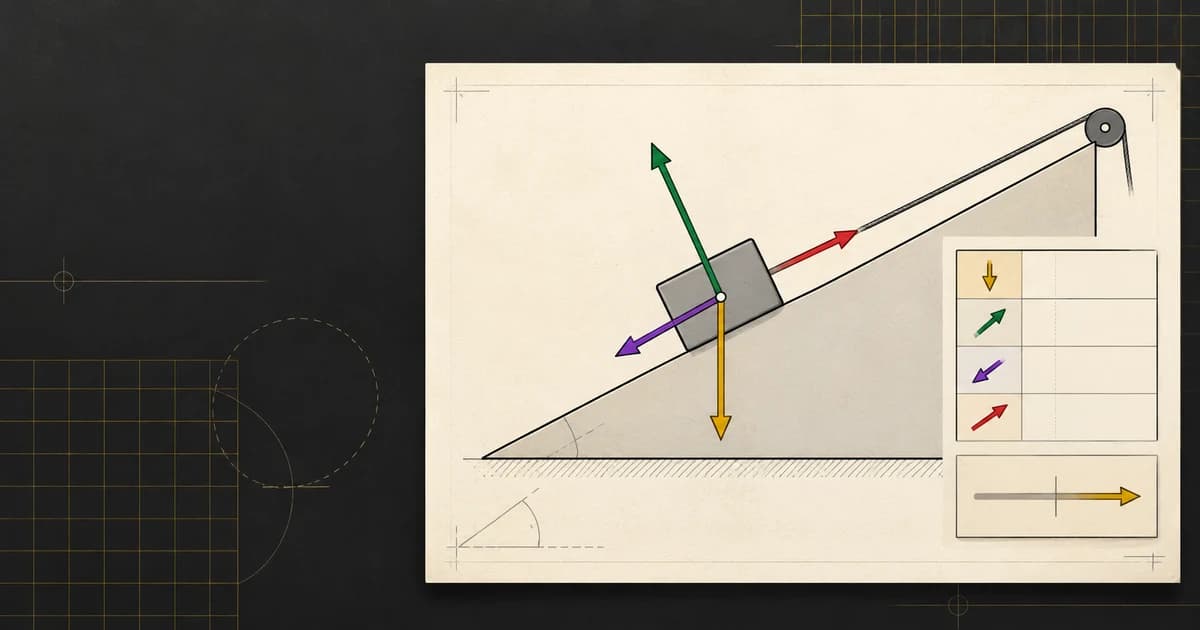
Block on a rough inclineBlock on a rough incline10 kg block25°+x+y10 kg blockWeight (mg) · 98.1 NNormal (N) · 88.9 NTension (T) · 60.0 NFriction (f) · 18.0 NΣF = 0.5 N @ 24°Angles measured counterclockwise from +x
Net force

0.5 N

Net direction

24°

Force state

Unbalanced

Acceleration

0.1 m/s²

Newton's Second Law Equation Lab

See exactly how the force components become acceleration. Every line updates from the same vectors and mass as the diagram.

Sum forces along x

ΣFx = −0.0 − 37.6 + 54.4 − 16.3 = 0.5 N

Sum forces along y

ΣFy = −98.1 + 80.6 + 25.4 − 7.6 = 0.2 N

Solve horizontal acceleration

ax = ΣFx / m = 0.5 / 10.0 = 0.0 m/s²

Solve vertical acceleration

ay = ΣFy / m = 0.2 / 10.0 = 0.0 m/s²

Resultant acceleration

|a| = |ΣF| / m = 0.5 / 10.0 = 0.1 m/s² · Direction 24°

The nonzero net force produces acceleration in the same direction as the resultant force, according to Newton's second law.

Check my diagram

4/4 ready

Gravity is represented

A weight force is included for the object.

Surface contact is represented

A normal force represents contact with the surface.

Every force is identifiable

Each arrow has a readable force label.

No duplicate interactions

No matching force type and direction appears twice.

Force components

ForceMagnitudeAngleFxFy
Weight (mg)98.1 N270°0.0 N-98.1 N
Normal (N)88.9 N115°-37.6 N80.6 N
Tension (T)60.0 N25°54.4 N25.4 N
Friction (f)18.0 N205°-16.3 N-7.6 N

The diagram and calculations stay in this browser. Your force data is not uploaded or saved.

Free body diagram basics

What Is a Free Body Diagram?

A free body diagram, or FBD, isolates one object or system and replaces every external interaction with a force vector. The arrow direction shows where the force acts, while its label and optional length communicate the force type and magnitude.

A correct FBD includes forces such as weight, normal force, friction, tension, drag, or an applied push. It does not include velocity, acceleration, a path of motion, or the reaction force acting on a different object.

This maker connects the drawing to the physics. Each force is decomposed into x and y components, all components are summed, and the net-force vector updates with the diagram. Enter mass and gravity to set W = mg, then inspect the full ΣF = ma substitution and acceleration before you export.

01

Isolate one object

Choose the exact body or system whose external interactions you need to analyze.

02

Add external forces

Represent gravity, surfaces, ropes, fluids, and applied pushes as labeled vectors.

03

Resolve components

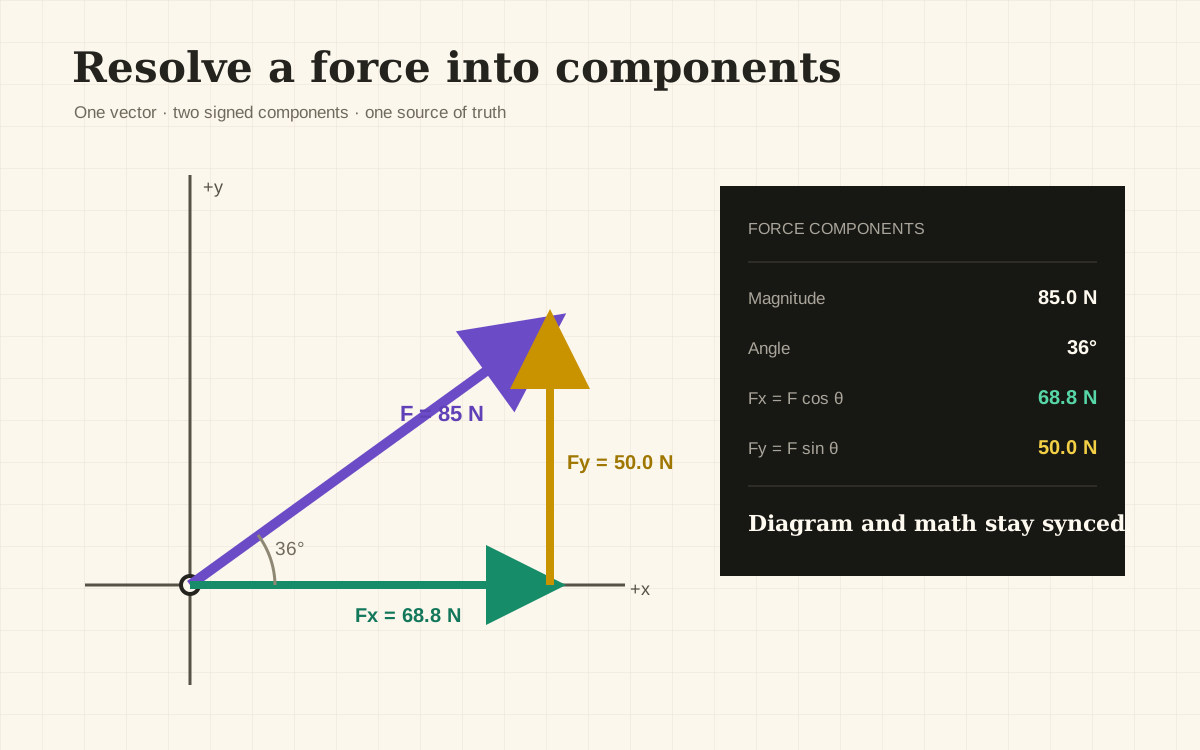
Use Fx = F cos θ and Fy = F sin θ for every force measured from +x.

04

Check the net force

Sum the components to test equilibrium or determine the acceleration direction.
Editable Free Body Diagram Examples for Physics

Load a complete physics setup, inspect its forces and components, then replace every value with your own scenario.

From homework to statics

Make Force Diagrams for Homework, Teaching, and Engineering

Build the same physics model in the level of detail your assignment, lesson, or technical note requires.

Free body diagram checklist identifying common physics setup mistakes

Check physics homework

Catch missing gravity, surface contact, duplicate forces, and incomplete labels before submitting the diagram.

Force vector components and net force explained on a coordinate grid

Teach vectors and Newton's laws

Turn components on or off, compare balanced and unbalanced systems, and copy a readable force table into lesson notes.

Engineering free body diagram of a block on an inclined plane

Prepare engineering figures

Set exact angles and magnitudes, then export a sharp SVG for reports, slides, or further editing.

More than an arrow drawer

Draw, Calculate, and Check a Free Body Diagram Online

Every force is structured data, so the visual result never drifts away from its components or net-force calculation.

Resolve every force into Fx and Fy

Enter magnitude and angle once. The component table and optional construction lines update from the same vector.

Build your free body diagram
Force vector resolved into x and y components with a calculation table

Solve ΣF = ma without leaving the diagram

Apply W = mg from mass and gravity, then follow live x- and y-equations through net force to ax, ay, and resultant acceleration.

Build your free body diagram
Newton's second law equation lab showing force sums and acceleration beside a free body diagram

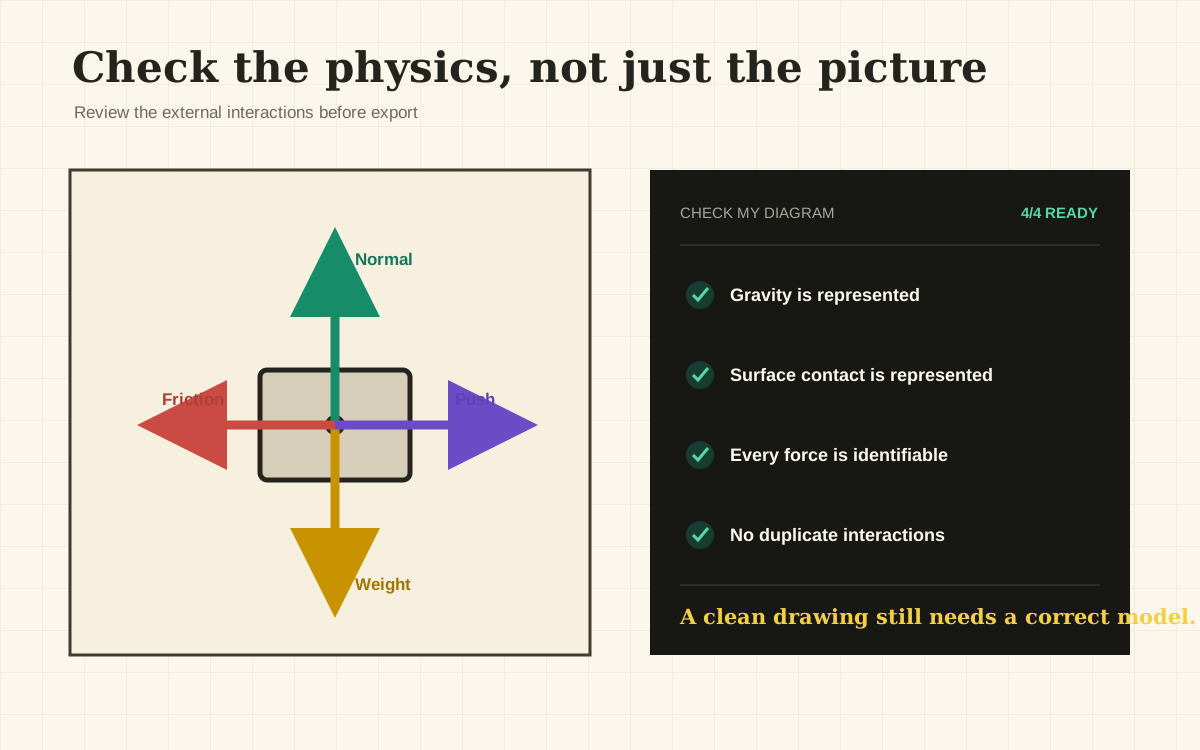
Review common FBD setup gaps

Check for gravity, surface contact, readable labels, and duplicate interactions before treating a polished picture as correct.

Build your free body diagram
Free body diagram review showing passed and flagged physics checks

Switch between direction and scale

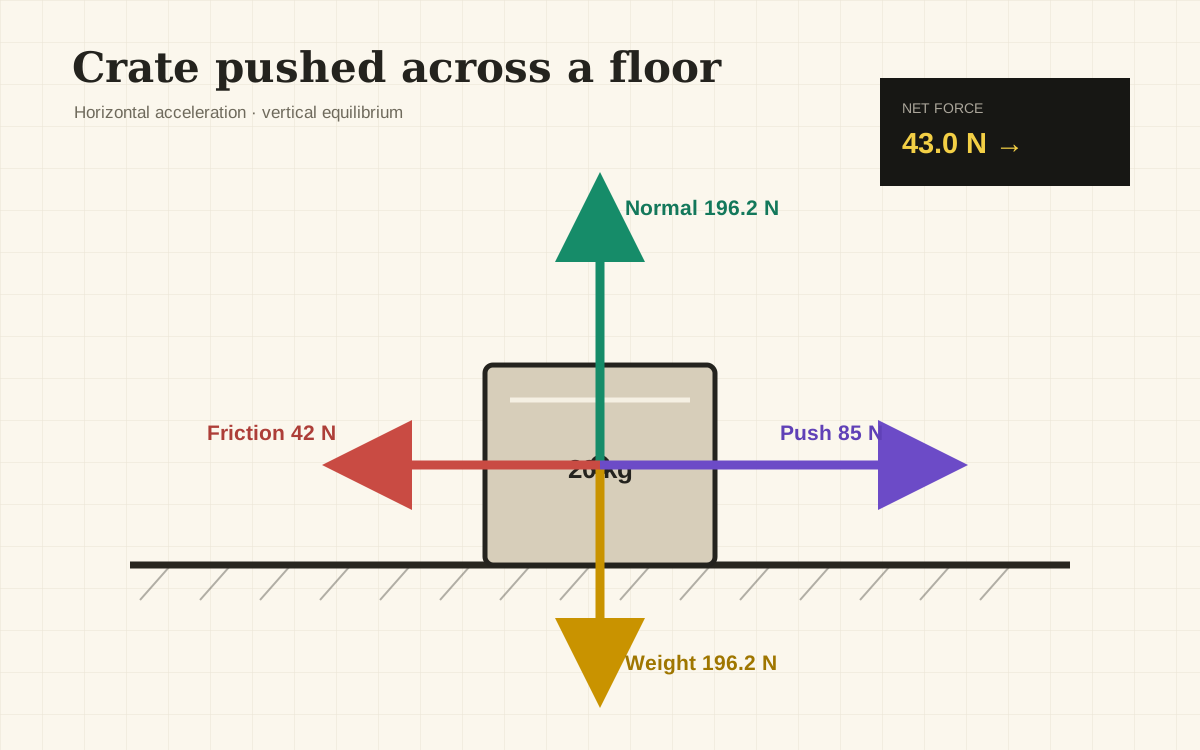
Keep arrows equal for conceptual teaching or scale their lengths by magnitude for quantitative comparison.

Build your free body diagram
Force arrows on a crate scaled by their physical magnitudes

Export a reusable, clean result

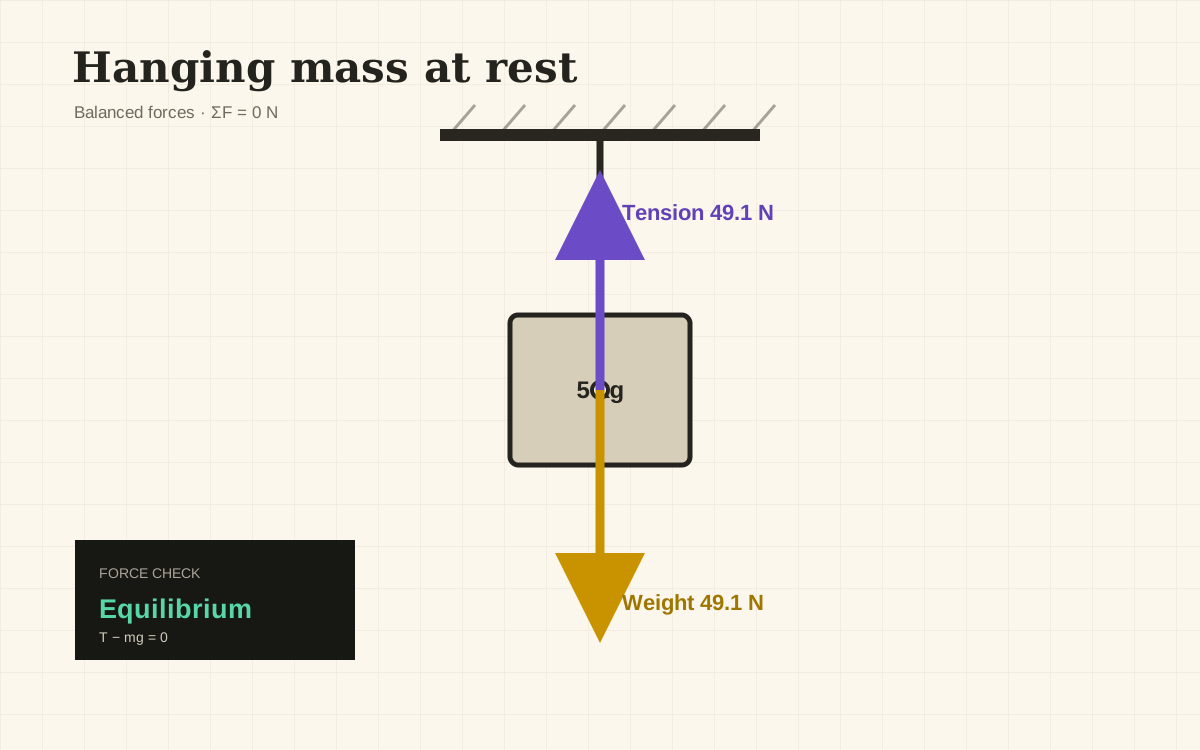
Download SVG for vector editing, PNG for documents, or copy the force table for calculations and lab notes.

Build your free body diagram
Hanging mass free body diagram prepared for export to a report
Physics-aware checks

Check Your Free Body Diagram Before You Submit It

The live checklist focuses on modeling choices that a generic drawing app cannot inspect. It helps you review the system boundary and the external interactions represented by each arrow.

Separate forces from motion

Velocity and acceleration describe motion; they do not belong in the force list.

Keep action–reaction pairs on different bodies

An FBD only shows forces acting on the isolated object, not the paired force it exerts elsewhere.

Do not assume zero net force means zero velocity

Equilibrium means zero acceleration in an inertial frame; the object may still move at constant velocity.

Treat formulas as conditional models

For example, N = mg cos θ only holds when no other force or acceleration changes the perpendicular balance.

Free body diagram quality check for gravity, contact, labels, and duplicate forces
The checklist reviews the model; you remain in control of every force and assumption.Diagram check

Built for usable output

Why Use This Online FBD Maker Instead of PowerPoint?

Move from a word problem to a diagram, calculation, and export without redrawing the same arrows in separate apps.

No sign-up

Start without an account

Open the page, edit the example, and export the result without signup or a watermark.

Private by default

Keep calculations local

Vector components and net force are calculated in the browser with deterministic math.

Always synchronized

Use one source of truth

The diagram, force table, components, net result, and acceleration equations all read from the same editable force list.

Vector-ready

Export at presentation quality

Use SVG for lossless scaling or PNG for homework systems, documents, and slides.

Physics-aware checks

Catch setup mistakes early

Review gravity, surface contact, labels, and duplicate interactions before you submit.

Equations stay linked

See the math behind every arrow

Inspect Fx, Fy, net force, and acceleration while every vector remains editable.

How to draw a free body diagram

How to Draw a Free Body Diagram in Three Steps

Follow the same three-step method for a floor, incline, hanging mass, or accelerating elevator.

01

Define the isolated object and surface

Name the exact body or system, enter its mass, and set the surface or incline angle before adding interactions.

02

Add and verify every external force

Enter one labeled vector for each pull, push, support, drag, or attraction, then verify its magnitude and direction.

03

Calculate, check, and export the FBD

Review components, net force, ΣF = ma, and diagram checks, then export SVG or PNG for your assignment, lesson, or report.

Make a free body diagram
Step-by-step free body diagram with force components and net-force calculation
Force labels, components, and the net vector remain editable until export.

Related visual tools

More Physics and Diagram Maker Tools

Use a focused diagram maker when the assignment changes from force analysis to another visual structure.

Scientific diagram editing workspace

Scientific Diagram Maker

Create a broader scientific process, mechanism, or system diagram.

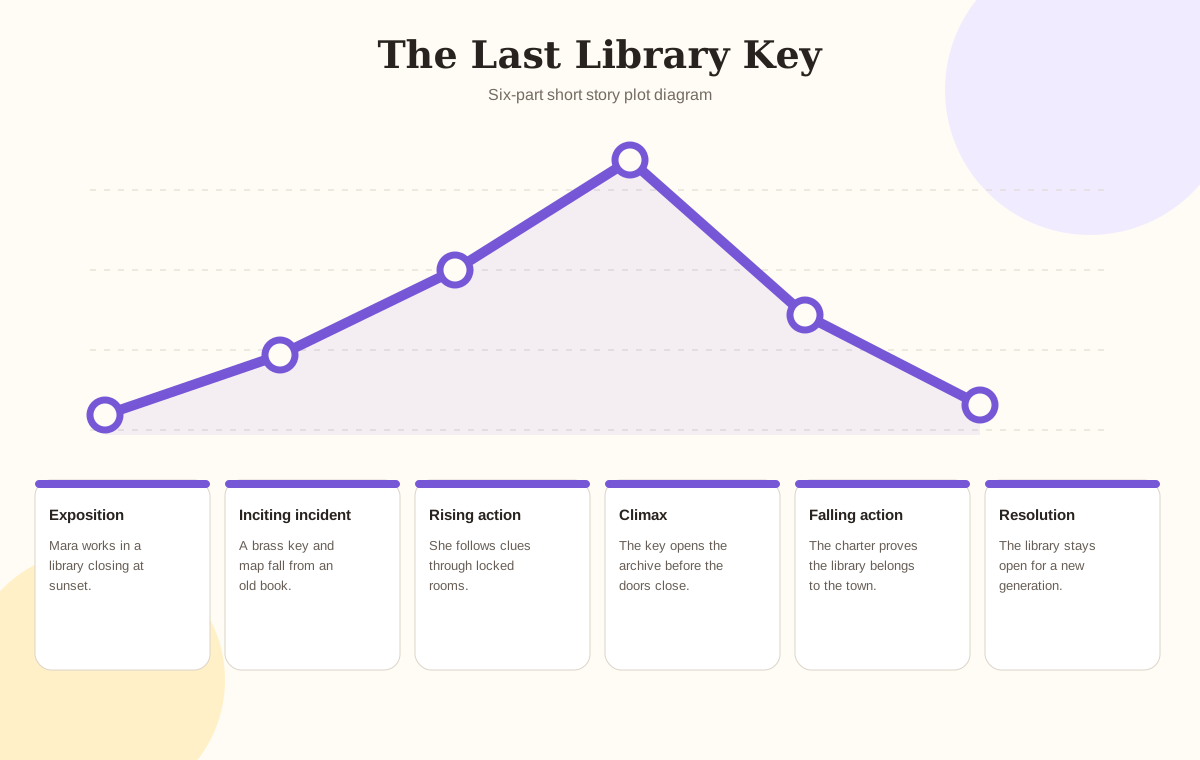
Six-stage plot diagram with a tension curve

Plot Diagram Maker

Map story events and tension onto an editable narrative arc.

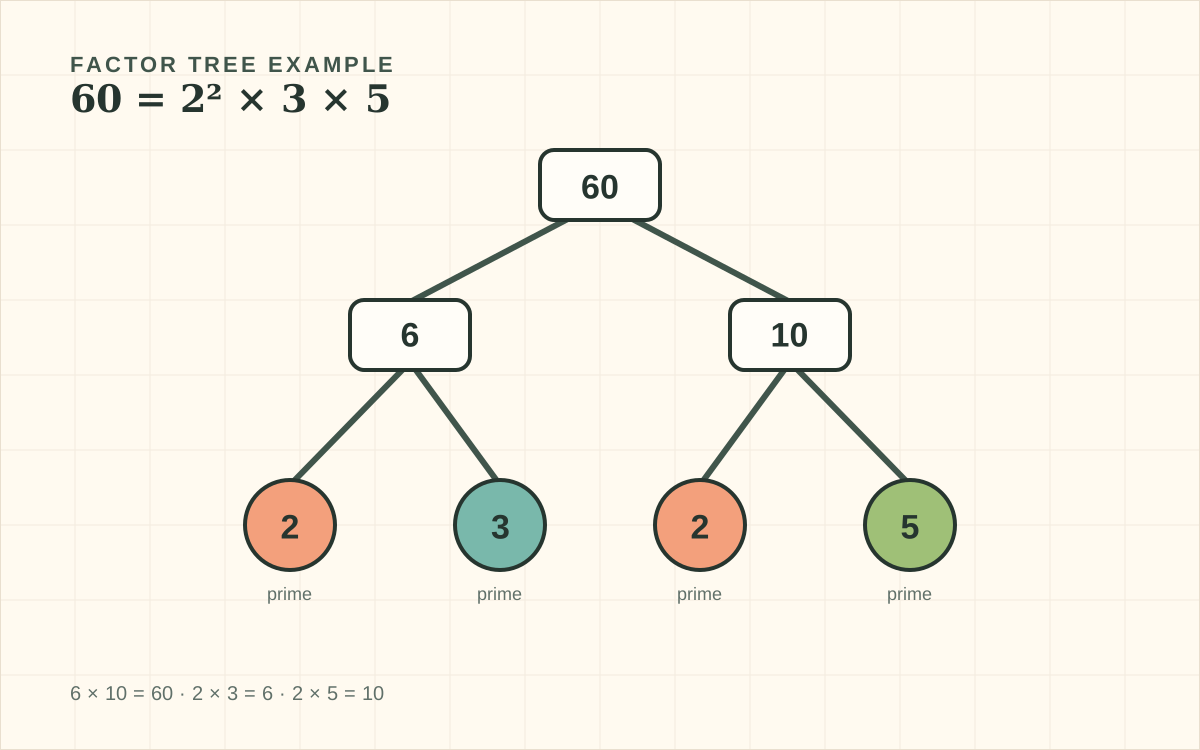
Factor tree with highlighted prime-number leaves

Factor Tree Generator

Build and export a visual prime factorization tree.

Three-set Venn diagram with labeled overlap regions

Venn Diagram Maker

Calculate and visualize exact overlaps across two to six sets.

Force diagram questions

Free Body Diagram Maker Questions

What is a free body diagram in physics?+

A free body diagram isolates one object or system and replaces each external interaction with a labeled force vector. It shows which forces act, where they point, and optionally how large they are, providing the model needed before applying Newton's laws, equilibrium equations, or component calculations.

Which forces should I include in a free body diagram?+

Include only external forces acting on the isolated object, such as weight, normal force, friction, tension, drag, spring force, or an applied push. Exclude velocity, acceleration, motion paths, and the reaction force acting on another body unless that body belongs inside the selected system boundary.

How do I draw a free body diagram on an incline?+

Set the incline angle, draw weight vertically downward, and place the normal force perpendicular to the surface. Add friction opposite the relative motion tendency and include tension or applied forces when present. Turn on component lines to verify directions along your chosen horizontal–vertical or incline-aligned axes.

How does a free body diagram maker calculate net force and acceleration?+

The maker resolves every vector with Fx = F cos θ and Fy = F sin θ, then sums the x and y components. It calculates the resultant magnitude and direction from those sums. With a positive mass, the Equation Lab also shows ax = ΣFx/m, ay = ΣFy/m, and resultant acceleration.

When should force arrows be drawn to scale?+

Use scaled arrows when the diagram should communicate relative force magnitude at a glance. Use equal-length arrows for conceptual lessons where readable labels and directions matter more than visual proportion. The numerical magnitude, component table, and equation results remain authoritative in either display mode.

What does zero net force mean on a free body diagram?+

Zero net force means the vector sum is within the equilibrium tolerance, so acceleration is zero in an inertial frame. It does not prove the object is stationary; the object may remain at rest or continue moving at constant velocity. Always interpret the FBD together with the stated motion conditions.

How can I export a free body diagram for PowerPoint or Word?+

Download SVG when you need a sharp vector diagram that can be resized or edited in compatible presentation software. Download PNG for quick insertion into Word, learning platforms, and homework submissions. Both exports use the same labels, vectors, and calculation-backed diagram shown in the live preview.

What kind of body diagram does this online maker create?+

This body diagram maker creates physics free-body diagrams: labeled force vectors acting on one isolated object or system. It is not an anatomy diagram, body-shape visualizer, workout chart, or pose-reference tool. The page focuses on mechanics, force components, equilibrium, and Newton's second law.

Start with the forces

Draw It Exactly. Check It Physically. Export It Anywhere.

Build a clean free body diagram, verify the force model, and follow ΣF = ma through to acceleration—all locally in your browser.

Open the Free Body Diagram Maker